Land of Toys
The Adventures of PinocchioThe Land of Toys is the destination Lamp-Wick sells to Pinocchio as a paradise of uninterrupted play, without schools, teachers, or books. Its streets initially seem to fulfill that promise: the country is populated entirely by boys, and play fills the day. But after five months, Pinocchio wakes with donkey ears and soon becomes a donkey. The reversal makes the place central to the story’s contrast between the freedom Pinocchio wants and the consequences of rejecting study and responsibility.
The Promise and the Journey
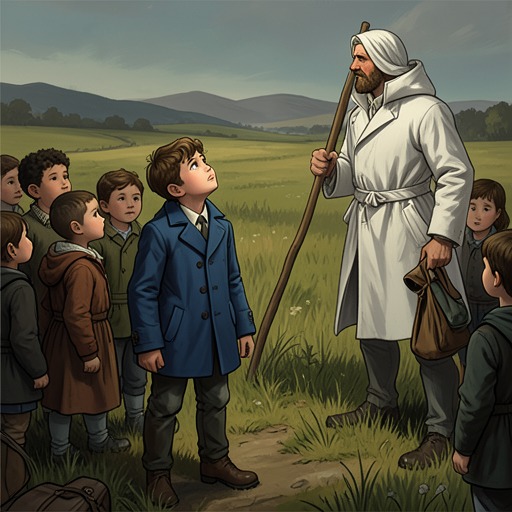
Lamp-Wick presents the Land of Toys as the best country in the world and urges Pinocchio to come with him. His argument is tailored to Pinocchio’s resistance to school: there will be no lessons, teachers, or books, and every day but Sunday will feel like Saturday. He describes a calendar of perpetual holiday, with vacation beginning on the first of January and ending on the last day of December, and a life spent playing from morning until night. Pinocchio initially refuses, but Lamp-Wick insists that he will regret staying behind and invites him to imagine a place suited to both of them.
The departure is set for midnight. Pinocchio eventually obeys Lamp-Wick’s invitation, and the journey ends at dawn the next morning. The wagon that carries them makes no noise because its wheels are wrapped in straw and rags; twelve pairs of Donkeys draw it, differing in color, with some marked by large yellow and blue stripes. The quiet, unusual conveyance brings the boys into a country that seems to have been made expressly for the escape they have chosen.
A Country Organized Around Play
The Land of Toys is described as a large country whose population consists wholly of boys, from about eight to fourteen years old. Its public life is almost entirely recreational. Groups play marbles, hopscotch, and ball; ride bicycles and wooden horses; or play blindman’s buff and tag. Other boys imitate circus performers, sing and recite, turn somersaults, or walk on their hands. Even the parade of generals leading regiments of cardboard soldiers becomes part of the general uproar, accompanied by laughter, shrieks, howls, catcalls, and applause.
The noise is not incidental to the setting: it is its defining atmosphere. Boys imitate a hen, a rooster, and a lion, while the crowded streets and squares seem to resound with simultaneous games and performances. Small wooden theaters fill the squares, with boys packed inside from morning until night. On house walls, charcoal slogans declare support for the Land of Toys, opposition to arithmetic, and the rejection of school. Those inscriptions make the country’s values public and unmistakable: study is not merely absent from the boys’ routine but openly repudiated.
Pinocchio, Lamp-Wick, and the other boys who arrive with them explore the country, wandering into its houses and theaters and looking into every corner. They quickly become friends with everyone and appear wholly at home in this world. Lamp-Wick even describes himself as generous for forgiving a teacher who disliked him and spoke ill of him; Pinocchio responds with an admiring embrace. The episode shows how completely the boys have adopted the country’s outlook, even as their confidence and cheerfulness precede a reversal they do not anticipate.
Five Months and the Reversal
The boys continue playing from morning to night for five months. During that time they never see a book, a desk, or a school. The duration matters: the Land of Toys is not presented as a brief holiday but as a sustained alternative to study, one Pinocchio inhabits long enough for its promise to feel like a settled way of life. The narrator addresses child readers directly while announcing that Pinocchio will wake to a surprise that makes him unhappy, turning the description of carefree play into a warning of what is coming.
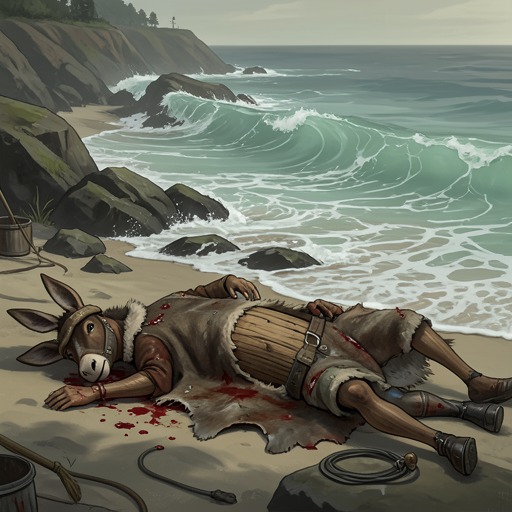
That morning, Pinocchio discovers that his ears have become like those of a donkey. The transformation soon proceeds further: he becomes a real donkey and begins to bray. The change gives the place its decisive narrative consequence. The boys’ chosen escape from school and books ends not in permanent freedom but in a bodily alteration that removes Pinocchio from the human form he has taken for granted. The bright slogans and noisy games are set against the humiliating surprise of his changed body.
Consequences Beyond the Country
The transformation follows Pinocchio beyond the Land of Toys. He is later trained to perform for a master who advertises the first public appearance of the famous donkey called Pinocchio. The boy who entered the country seeking unrestricted amusement is thus displayed as an attraction, his body made part of a public spectacle. At a performance, he recognizes The Fairy with Azure Hair in the audience by the medallion bearing a picture of a Marionette. The encounter reconnects the altered donkey with his former identity, but it does not undo the transformation’s consequences.
The Land of Toys therefore functions both as an enticing setting and as the turning point into Pinocchio’s donkey life. Its attractions are concrete and communal—games, theaters, parades, and companionship—while its rejection of learning is written on the walls and built into the boys’ daily routine. The five-month interval gives that refusal time to become a world of its own; the awakening breaks the illusion. The place’s central irony is that a country promising freedom from obligation leaves Pinocchio less able to choose what happens to him.